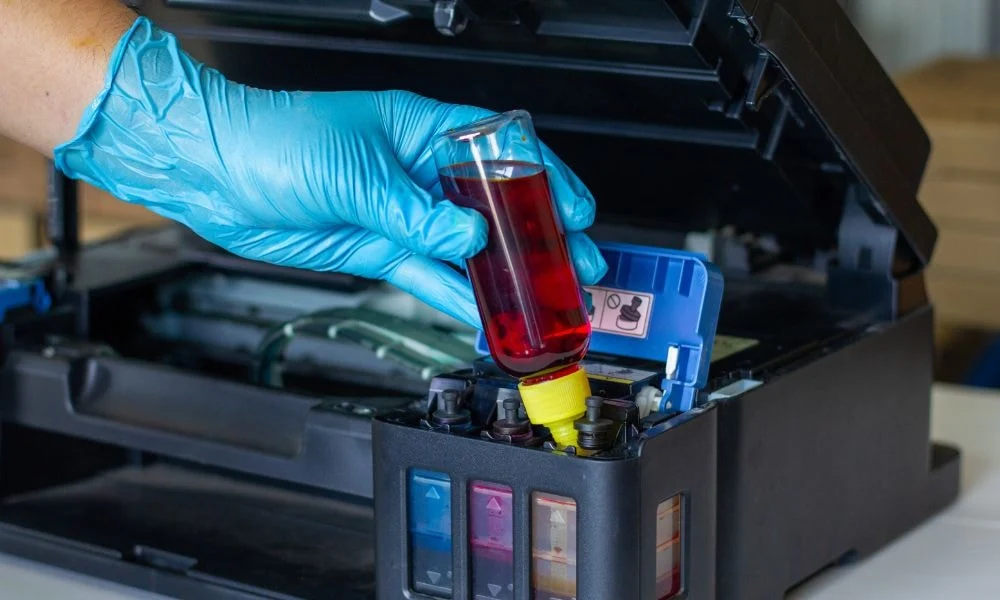
Running out of ink at the wrong moment is one of those minor frustrations that office workers and home users share equally. The solution is rarely as complicated as it seems, but choosing the right cartridge and the right supplier, does require a bit of know-how. Understanding what your printer needs, how compatible options compare to originals and where to buy reliably will save both time and money over the long run.
Original vs Compatible vs Remanufactured Cartridges
Original equipment manufacturer (OEM) cartridges come direct from the printer brand, Epson, Canon, HP, Brother and are designed to exact specifications. They tend to be the most expensive option and are often marketed as the only safe choice, though that claim does not always hold up under scrutiny.
Compatible cartridges are new products made by third-party manufacturers to match OEM specifications. Quality varies widely depending on the supplier, but a well-made compatible cartridge prints cleanly, meets the stated page yield and does not void a printer’s warranty under most circumstances. Remanufactured cartridges go one step further by refurbishing used OEM shells and refilling them, a more sustainable option that can deliver comparable results when done properly.
The Cartridge Centre stocks all three types, giving buyers the flexibility to choose based on their priorities, whether that is print quality, environmental impact or budget.
How to Find the Right Cartridge for Your Printer
Printer cartridges are model-specific and using the wrong one can cause compatibility errors or poor print quality. The easiest method is to check the cartridge number currently installed in the printer, it is usually printed on the cartridge itself or visible inside the printer door. Alternatively, the printer’s model number, found on the casing, can be used to search a retailer’s catalogue.
Most specialist suppliers categorise printer cartridges by brand, then by printer model, making the lookup process straightforward. The Cartridge Centre organises its catalogue this way, allowing buyers to navigate directly to compatible options without sifting through unrelated products. Checking the ISO page yield, the standardised measure of how many pages a cartridge prints, is worth doing before purchase, as higher-yield XL versions often offer better value per page.
Ink Cartridges vs Toner Cartridges Key Differences
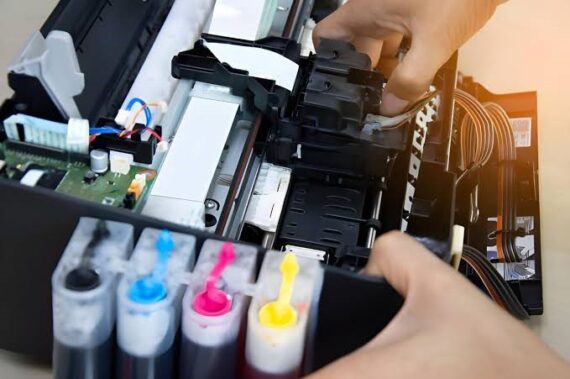
Inkjet and laser printers use fundamentally different consumables. Inkjet printers use liquid ink stored in cartridges, which is sprayed onto paper through microscopic nozzles. These printers excel at producing photo-quality output and handle colour gradients well. The trade-off is that ink cartridges run out faster under heavy use and the ink can dry out if the printer sits idle for extended periods.
Laser printers use toner, a fine powder that is fused onto the page using heat. Toner cartridges typically offer significantly higher page yields than ink cartridges, making laser printers more economical for high-volume text printing. They are faster, sharper on text and less prone to smudging. The initial cost of toner is higher, but the cost per page usually works out lower over time. The Cartridge Centre
Understanding this distinction helps buyers invest in the right consumable. A household printer used occasionally for school documents has different needs than an office printer running hundreds of pages per week. Both use cases are well served by the range available at The Cartridge Centre.
Getting More From Your Printer Cartridges
A few straightforward habits extend cartridge life and maintain print quality between replacements. Printing in draft or economy mode for internal documents reduces ink consumption without noticeably affecting readability. Cleaning the print head periodically, most printers include a maintenance option in their settings, prevents nozzle blockages that lead to streaky output.
Leaving the printer powered off rather than unplugged between uses helps maintain the seal on the cartridge. When a low-ink warning appears, many printers still have usable ink remaining, printing a test page confirms whether replacement is genuinely needed or whether the cartridge can continue a little longer. For those who print photos or graphics, choosing the right paper type makes as much difference as cartridge quality.
Sustainability and the Case for Remanufactured Ink
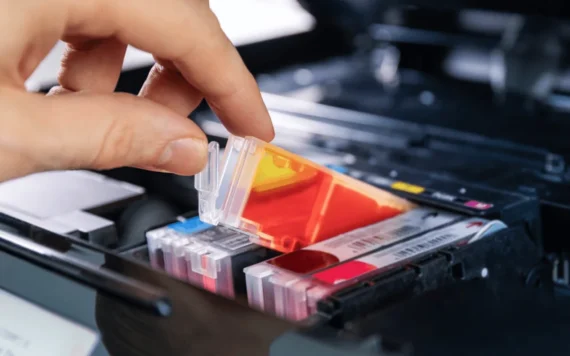
Cartridge waste is a real environmental concern. Billions of printer cartridges are discarded annually and the plastic and metal components take hundreds of years to decompose in landfill. Remanufactured cartridges address this directly by giving used shells a second life rather than creating new waste. Many suppliers also offer take-back schemes that collect empties for reprocessing.
- Remanufactured cartridges reduce plastic waste compared to buying new every time.
- Recycling programmes at specialist retailers close the loop on cartridge disposal.
- Compatible cartridges from established suppliers often match OEM yield with lower emissions per unit.
- Buying in bulk reduces the frequency of individual shipments and associated packaging.
- Choosing longer-yield XL options decreases replacement frequency and total cartridge count over time.
Why a Dedicated Cartridge Specialist Beats a General Retailer
General office suppliers and supermarkets carry a limited range of OEM cartridges at full price. A dedicated specialist holds a far wider selection, covers both current and older printer models and typically stocks compatible and remanufactured alternatives that general retailers do not. Pricing at specialist level is almost always more competitive and the product knowledge available through customer support is more relevant.
For buyers managing a mixed fleet of printers, home, home office or small business, having a single reliable source for all printer cartridges simplifies the reorder process significantly. The Cartridge Centre is built around exactly this use case, with a catalogue that spans hundreds of printer models and a range of ink and toner options that covers virtually every printing need.